Powered By Optimal Payments

Other Places

Adam's Peak
Buduruwagala
Galle
Kataragama
Kitulgala

Galle
Then…

In 1505, a Portuguese fleet set sail to intercept Moorish vessels carrying cargoes of spice, but it was driven off course and landed at what was to become the gateway to the south. The newcomers named the harbour "Galle", after the crowing cockerels that they heard at the end of the day (Latin gallus), although this origin of the name has been disputed. Other suggestions include the Sinhala gala (cattle shed) or gal (rock).

Howsoever it got its name, Galle's origins as a port go back well before the Portuguese, who finally captured it from the Sinhala kings in 1587. Ibn Batuta, the great Moroccan traveller, visited it in 1344, and it is claimed that Galle was the ancient city of Tarshish, which had traded not only with Persians and Egyptians, but with King Solomon. In 1640, following a siege, the Dutch East India Company (VOC) relieved the Portuguese of this important trading post and held it until they, too, lost it to the British in 1796, who further developed the fort area and environs until independence.

…and now

Today, Galle (pronounced "Gawl") is the most important town in the south and has retained much of its colonial atmosphere. The crescent-shaped shoreline was once dotted with islands, though some have now joined up or been altered by the harbour developments. The Portuguese, Dutch and British used the natural harbour as their main port until 1875, when reconstruction of breakwaters and the enlarged harbour made Colombo the island's major port.

Why visit Galle?

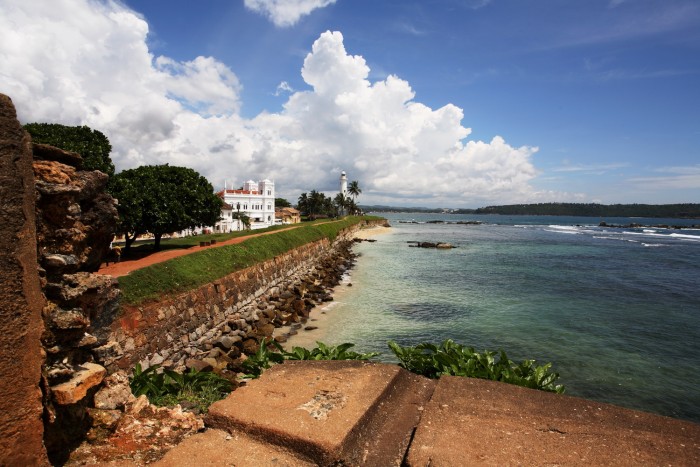
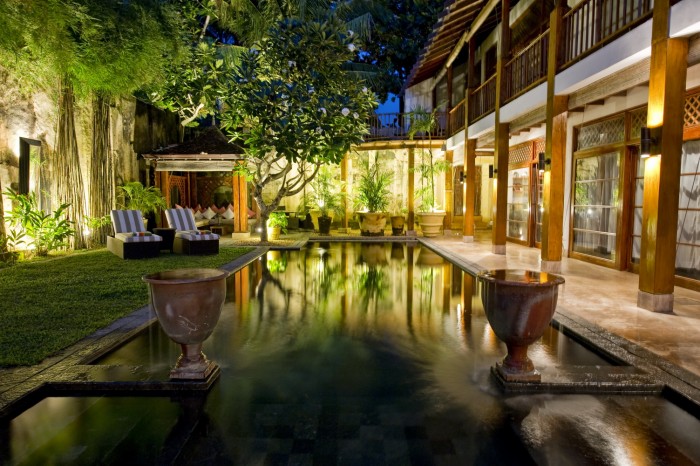
The highlight of a visit to Galle is a tour of the Old Dutch Fort, which was declared a World Heritage Site in 1988. Around the Galle area are some very special places to stay, in fact some of the best on the island. Galle is also a good centre for visits to Unawatuna beach and the rainforest nature reserve of Sinharaja National Park. Sites and activities of interest around Galle include:

Hiyare Rainforest Park
Kanneliya Forest Reserve
Kottawa Arboretum
Mahamodara River Trip
Seashore Trail
Whale and Dolphin Watching


Old Dutch Fort

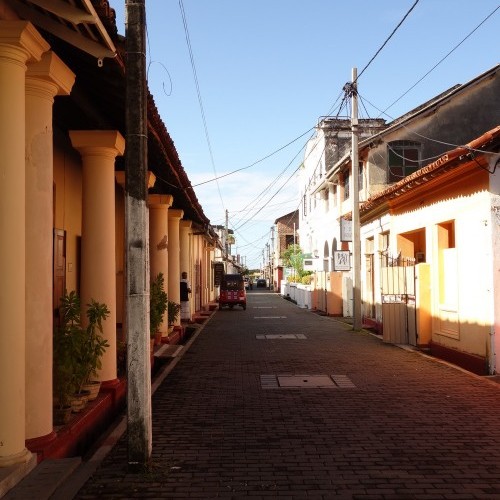
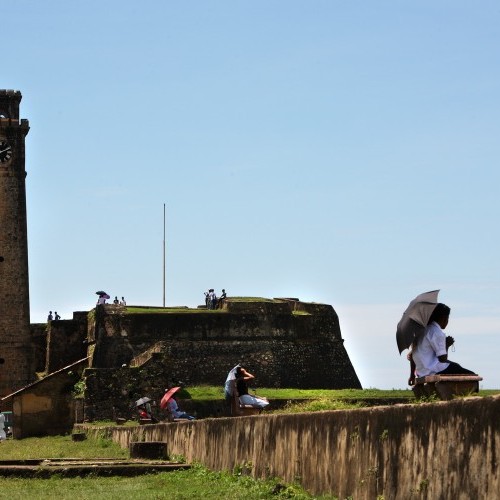
The old fort, enclosing about 200 houses, completely dominates the town. The Dutch left their mark here, building brick-lined sewers, which the tides automatically flushed twice a day. The fort's main streets run over these old sewers and you can still see the manhole covers every 20 m or so. Part of the charm of the fort is being able to wander around the streets, as nothing is very far away.

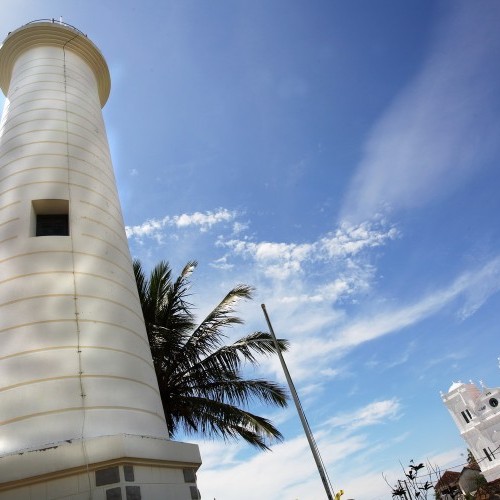
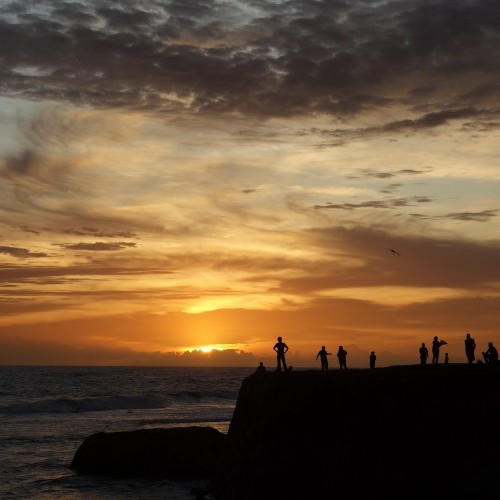
The ramparts, surrounded on three sides by the sea, are marked by a series of bastions covering the promontory. The two nearest to the harbour are Sun and Zwart, followed by Akersloot, Aurora and Point Utrecht bastions before the lighthouse, then Triton, Neptune, Clippenburg, Aeolus, Star and Moon. Those on the west side are more accessible and stand much as they were built. The ramparts around the Sun and Moon bastions, which act as sentries each side of the main gate, afford a great bird's-eye view of the esplanade, new town and cricket stadium, especially when international matches are played.

Within the ramparts lies the old town. Wandering around this atmospheric and historical area, you will pass through the Arab Quarter, with its distinct Moorish feel, past the neo-Gothic All Saints Church and the Groote Kerk (1754), which is next to the New Oriental Hotel, the oldest registered hotel on the island and now an Amanresort. Other interesting buildings in the old town have been converted into museums, like the National Museum, once a colonial warehouse, the National Maritime Museum, near the Old Gate and originally storehouses, and the Historical Mansion Museum, an 18th Century Dutch residence that has been recently restored.

Most of the principal sites of interest can be visited in a 2-hour tour from either Galle or Unawatuna.

Whale and Dolphin Watching

"During the season, a Blue Whale is easier to see to the south of Dondra, than a leopard in Yala", so says Gehan de Silva Wijeyeratne, one of Sri Lanka's leading wildlife experts. Sri Lanka's south coast between Galle and Mirissa may be one of the most reliable sites in the world for seeing Blue Whales and Sperm Whales, two of the most sought after marine mammals, as well as large pods of Long-snouted Spinner Dolphins. In fact, it may even turn out to be the best location in the world for seeing both Blue and Sperm Whales together. The calm seas between December and April offer an outstanding opportunity for observing Blue and Sperm Whales close to shore, with sightings peaking in December and April due to the seasonal migration of the whales.

A Whale and Dolphin Watching boat trip can be organised from Galle as a half-day excursion (06.00 start).

Seashore Trail

Sri Lanka is blessed with over 1600 km of coastline, and for the adventurous this can offer the opportunity of more than a relaxing stay on a palm-fringed and sandy tropical beach! Offshore lies an abundance of reefs, which are home to a dazzling array of colourful fish and corals, while the more accessible strip of seashore is the habitat of hundreds of animal and plant species including marine algae and grasses, molluscs and crustaceans, and coral reef fish within rock pools.

A guided walk along the seashore at Galle is best at either dawn or dusk and lasts
1 hour.

Mahamodara River Trip

The boat safari covers a distance of about 12 km up to the Walkwella Bridge along the Mahamodara River, a major tributary of the mighty Ginganga, which originates in the Rakwana Hills, flowing via Sinharaja to meet the Indian Ocean at Galle. This memorable and rewarding trip meanders through a variety of lush mangroves and lotus species with a kaleidoscope of colours, and among birds, butterflies and water monitors.

Sri Lanka is home to at least 19 species of mangroves and up to seven can be seen on this excursion. These highly adapted, salt-tolerant woody plants are found in mud flats of lagoons, estuaries and river deltas, and are very important to the stability of the local environment as they help to reduce soil erosion and provide a protected habitat for birds and aquatic animals. Floating on the water are large expanses of Nymphaea pubescens, with pink flowers, their large, dark green and glossy upper surface giving away to a purple and hairy, waterproof underside. Nelumbium nusifera, with large red flowers and large, circular dull green leaves, provide an excellent habitat for the lily-trotters such as the White-breasted Waterhen and Pheasant-tailed Jacana. Nymphoides parviflorium, which has tiny white flowers, is another water lily that thrives among the other two species. Water lilies have value in Ayurvedic medicine as well as in traditional cuisine.

The trees bordering the riverbanks are Alstonia species. Divi Kaduru (Rejoua dichotoma) is a medium-sized tree with white flowers and its soft wood is used for carving masks, a traditional handicraft of Southern Province. Annona glabra, introduced by the Dutch, Pandanus species and various bamboos are the commonest inhabitants of the area.

Early mornings are best for bird watching. A variety of water-borne birds can be seen including Purple and Grey Herons, Large and Little Egrets, Indian Shag, and White-breasted, Common and Indian-pied Kingfishers. Among the forest dwelling birds are the Spotted Dove, Pompadour Green Pigeon, drongos, bee-eaters, parakeets, coucals, and barbets. The birds of prey include the Brahmini Kite, White-bellied Sea Eagle and the Tank Eagle.

The boat safari is best at dawn and lasts about 3.5 hours.

Kottawa Arboretum

Kottawa Forest Reserve (Arboretum), which is situated about 19 km northeast of Galle, is a small (15-hectare), isolated patch of low country rainforest displaying all of the features of a typical wet evergreen rainforest. Tall trees with buttressed trunks and overlapping leaf canopies struggle upwards to reach any available sunlight and prevent the sun from penetrating to the forest floor. As trees are the dominant plant species, Kottawa is considered a climax community, which is a healthy sign for the forest's longevity. Any vegetation that does grow is dominated by Dipterocarpus species and tree ferns, while orchids and mosses inhabit the tree bark.

There are over 170 tree species identified in the area of which about 100 species are endemic to Sri Lanka. Seventy or so bird species have also been recorded, including 12 endemics such as the Yellow-fronted Barbet, Brown-capped Babbler, Spot-winged Thrush, Sri Lankan Spurfowl and Grey Hornbill. It is also a good place to spot some of the island's beautiful butterflies (e.g. Birdwing, Tree Nymph, Clipper, Blue Oakleaf), as well as the Purple-faced Leaf Monkey, Toque Macaque and Giant Squirrel, which dominate the forest canopy. Among the reptiles are some of Sri Lanka's non-venomous snakes and endemic agamid lizards. The unpolluted streams that traverse the forest harbour a variety of fish including many endemic species.

A guided excursion to Kottawa Arboretum starts at 07.30 from Galle and lasts about 4 hours (including travel time).

Kanneliya Forest Reserve

Kanneliya Forest Reserve, which is part of the Kanneliya Dediyagala Nakiyadeniya (KDN) complex of rainforests, is located about 47 km east of Galle and is one of the last remaining large tracts of lowland rainforest in Sri Lanka. KDN complex is delimited by two rivers, the Gin Ganga and Nilwata Ganga, and consists of a series of ridges and valleys at an elevation of 60-425 m above mean sea level. The natural vegetation of KDN complex is lowland wet evergreen rainforest, which is a climax community dominated by the Doona (shorea), Dipterocarpus, Mesua association, with close affinity to the lowland rainforests of Malaysia. The region has been identified as one of the richest areas for rainforest flora in South Asia.

KDN complex contains 159 species of woody plants and over 100 species of birds, including 16 endemics such as the Green-billed Coucal, Blue Magpie and Spot-winged Thrush. Over 15 endemic freshwater fish species can be found in the Kanneliya streams, and many other endemic reptiles, amphibians and butterflies are also seen in the area.

There are 78 villages surrounding KDN complex that actively farm the area. Small-scale cottage industries have grown up based on the kitul (fishtail) palm, and many people are involved in the collection of medicinal plants and plant products, and rattan for handicrafts and furniture. Harvesting bee honey has been a popular activity, but is now declining, although it is still an important part of the rural community.

A guided trek to Anagimala Ella waterfall (6 km) in Kanneliya Forest Reserve includes bird watching and other wildlife spotting opportunities, and a chance to bathe in a natural cascading waterfall. The excursion starts at 07.00 from Galle and lasts about 8 hours (including travel time).

Hiyare Rainforest Park

Hiyare Rainforest Park is about 19 km from Galle and contains a reservoir bordered by over 240 hectares of secondary lowland rainforest. The reservoir was established in 1919 and is over 20 hectares in area. Hiyare Rainforest Park is part of the Southern Sinharaja-Hiniduma-Kanneliya plant community, with the dominant trees being Hora, a member of the Dipterocarpacea family, Malaboda and Kekiriwara. Weval, a Calamus vine, is also found here, which has been depleted from most Sri Lankan rainforests due to unsustainable harvesting. Venival, a locally known medicinal creeper, is widespread in the forest, and tree trunks are often clothed in Gini vatarang, a Cyathea.

The reservoir offers excellent bird watching opportunities with over 80 species recorded, including 10 endemics (e.g. Sri Lankan Spurfowl, Brown-capped Babbler, Spot-winged Thrush, Black-capped Bulbul, Grey Hornbill and Sri Lankan Hanging Parrot). The Giant Squirrel (Indian Grizzled Squirrel), Palm Squirrel, Toque Macaque and Purple-faced Leaf Monkey are residents of the rainforest as are the Golden Palm Civet and Sambar deer. Butterflies include the Blue Mormon, Common Sailor, Crimson Rose, Bluebottle and Blue Oakleaf. Large numbers of amphibians and reptiles, many of which are endemic to the island, are also found in the area.

A guided bird and wildlife watching safari around the reservoir and rainforest borders starts at 07.30 from Galle and lasts about 4 hours (including travel time).