Nuwara Eliya
Then
Nuwara Eliya ("City of Light", pronounced "Nu-REL-iya")
was developed by the British in the early 19th Century,
who found its cold winters, its drizzle and fog in spring,
and the heavy rain followed by storms between May and
August made them feel quite at home! It became one of
several hill stations that dotted the colonial empires
of the tropics, a sanatorium where those afflicted could
come to recuperate from ailments contracted in the furnace
of the coast. Without the pretensions or political significance
of the Raj hill stations in India, Nuwara Eliya nonetheless
was an active centre of an English-style social life,
with county-style sports including a hunt, polo, cricket
and tennis.
and
now
At the centre of the Hill Country south of Mount Pidurutalagala,
Sri Lanka's highest mountain (2524 m), there is a plain
at an altitude of 1900 m. Surrounding this plain, like
a protective wall, is a barrier of high wooded mountains
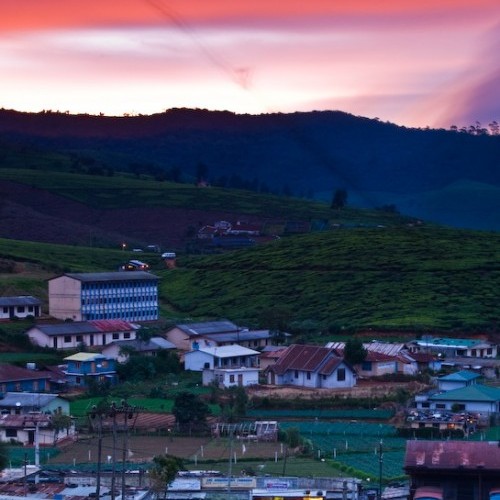
with gentle, scrub-covered hilltops. Nestling into these
hills is Nuwara Eliya, the highest town in Sri Lanka
and a major hill resort. It offers a cool escape for
middle-class Sri Lankans from the lowland plains (the
nights can be very cold), especially at long weekends
and for the "season" in April, when prices
more than triple and accommodation becomes virtually
impossible to find.
Nuwara Eliya has retained all the paraphernalia of a British
hill station, with its colonial houses, parks, churches,
the veritable Hill Club, a pristine 18-hole golf course,
a dilapidated horse racing circuit, and trout streams.
However, the real clue to its past perhaps lies in its
extensive private gardens, where dahlias, snap-dragons,
petunias and roses flourish amongst well-kept lawns.
Why visit Nuwara Eliya?
Despite its variable and unpredictable
climate, Nuwara Eliya can be a pleasant respite from
the oppressive heat of the coast and Ancient Cities'
area. With interesting reminders of its colonial past,
including a golf course,
and some attractive walks, it is also a useful base
for visiting The Tea Factory at Kandapola,
Labookellie Tea Factory
on the Kandy road, and Hakgala Gardens towards the southeast,
or taking excursions further afield to
Horton Plains National Park,
which may be arranged through Tikalanka Tours.
A leisurely walk through the streets
and green spaces will take you past the delightful little
post office with its pink brick walls, across the golf
course, the largest in Sri Lanka and the oldest course
in Asia, to the nostalgic Hill Club, where a suit and
tie are still required for dinner. On through Victoria Park
towards the racecourse takes you past rather quaint
planters' houses, some of which have been turned into
guest houses. For a panoramic view of the area, a path
leads up to Single Tree Hill (2100 m), which is a good
alternative to the now out-of-bounds Mount Pidurutalagala,
whose peak is a prohibited area for security of the
island's first TV transmitter there.
The Tea Factory at Kandapola
|
|
The
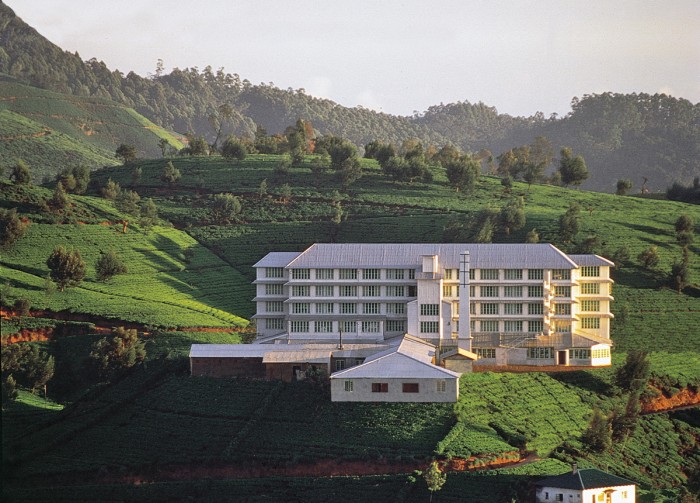
Tea Factory at Kandapola, 14 km from Nuwara Eliya, which
has been converted into an excellent hotel, retains
a small working tea estate facility, where you can see
how tea is produced and taste various high grown preparations.
The original oil-driven engine (now powered by electricity)
is still in place and switched on occasionally. The
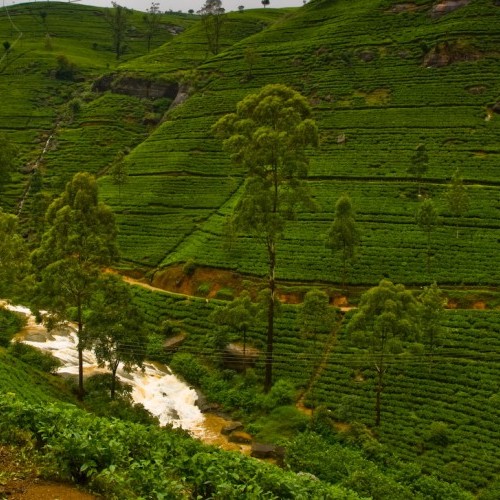
Tea Factory is surrounded by its own tea plantations
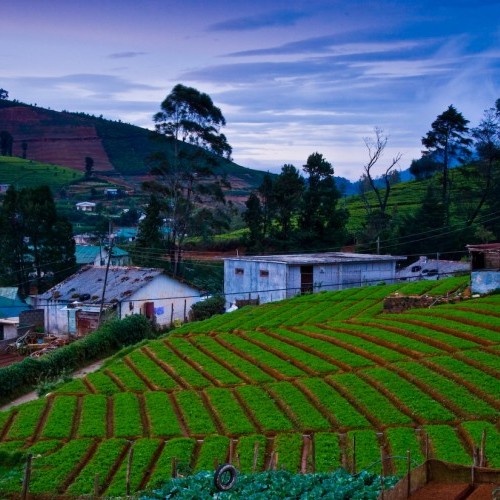
and commands superb views across the verdant countryside.
A visit to this very picturesque area is highly recommended
and may be arranged through Tikalanka Tours. Better still,
Tikalanka Tours will book you into the award-winning
Tea Factory, where you will enjoy a stay in relaxed
and historic surroundings.
Fifteen kilometres from Nuwara Eliya on the Kandy road is the
conveniently-placed Labookellie Tea Factory, a fully-working,
commercial enterprise. Here you will see tea being processed
at close quarters, from freshly-picked "two-leaf-and-a-bud"
to the finished tea ready for auction in Colombo. You
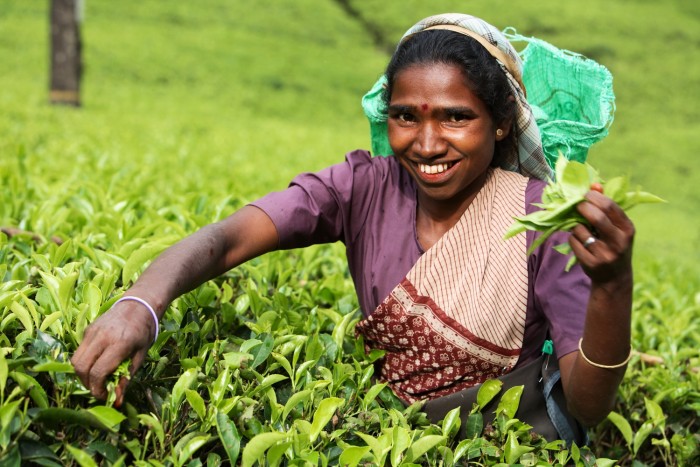
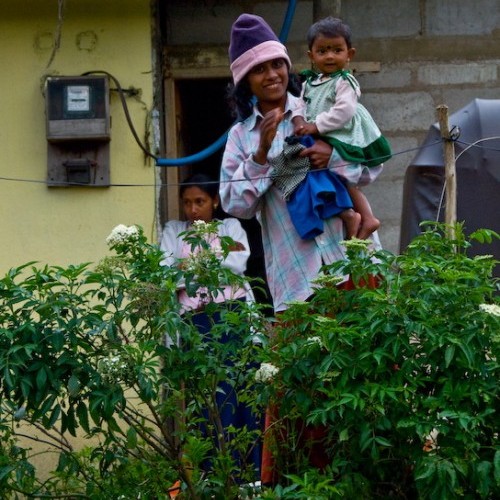
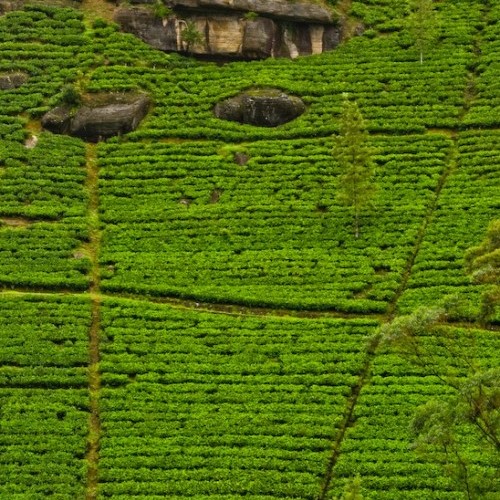
will also see the Tamil tea-pickers in the surrounding
tea estates filling their baskets with tea leaves before
bringing them down to be weighed. After a tour of the
tea factory, Broken Orange Pekoe is on offer, together
with delicious, home-made chocolate cake!
A visit to the Labookellie Tea
Factory from Nuwara Eliya normally lasts 1.5 hours.
The delightful gardens at Hakgala, 10 km southeast of Nuwara Eliya and about 200 m lower,
were originally a plantation of cinchona, from which the antimalarial drug quinine is
extracted. Later, the gardens were used for experiments in acclimatising temperate-zone
plants to life in the tropics, and were run by the same family for three generations until
the 1940s. Today, Hakgala Gardens is spread over 27 hectares of land, and is famed for
its roses and ferns.
Legend has it that Hanuman, the monkey god, was sent by Rama to the Himalaya to find a
particular medicinal herb. Hanuman had been summoned by Rama to ancient Lanka to help him
free his wife Sita from the clutches of the devil-king, Rawana, who had kidnapped her.
He forgot which herb he was looking for and decided to bring
a chunk of the Himalaya back to Sri Lanka in his jaw, hoping the herb was growing on it.
The gardens grow on a rock called Hakgala, which means 'jaw-rock'.
A visit to Hakgala Gardens from Nuwara Eliya normally
lasts 2 hours.
Nuwara Eliya Golf Course (5520 m, par 71) is reputed to be one of Asia's finest.
The fairways are long and narrow and bordered by fir trees and thick bushes.
It demands skilful 'position play', and the hilly terrain makes it essential that
players can cope with uphill and downhill lies. Nuwara Eliya Golf Course is ideally
located in the centre of town surrounded
by swaying trees. The period clubhouse contains a restaurant and bar, with sloping
green lawns stretching out endlessly in front of you. Not exactly the type of
atmosphere you would normally associate with Sri Lanka? Well, think again!
The 18-hole Nuwara Eliya Golf Course is situated at an elevation of nearly 2000 m.
In this cool climate and scenic surroundings, the course was laid out by the Gordon Highlanders
stationed here in the late 1880s. A legacy from the British colonial period, golfing in
Sri Lanka has many nostalgic links to this era, when wealthy British planters
and government officials spent their evenings at clubhouses in an effort to recreate
the lifestyle they had left behind. Today, these period relics are put to good use by
tourists and travelling businessmen enticed by the calm and soothing atmosphere associated
with golf, as well as by locals taking a break from the absorbing national pastime of cricket.
A round of 18 holes at the Nuwara Eliya Golf Course, which includes green fees,
golf balls, and the hire of clubs, shoes and a caddy, will take about 4 hours.
|