A to Z of Things To Do
Ayurveda
Bird-watching
Cinema
Discos & Nightclubs
Diving & Snorkelling
Golf
Hiking
Mountain Biking
Pubs & Bars
Shopping
Spectator Sports
Theatre, Classical Music & Galleries
Traditional Music & Dance
Watersports
Ayurveda, the science of life and health, is the ancient
Hindu (Indian) system of medicine - a naturalistic and holistic
system depending on diagnosis of the body's 'humours'
(wind, mucus, gall and, sometimes, blood) to achieve
a balance. Treatment is carried out by using herbs,
minerals, formic acid and water, and special note is
made of the action of food and drugs on the human body.
With the renewed interest in alternative forms of therapy
in the West, Sri Lanka has seen a regeneration of special
Ayurvedic herbal cure centres, which are increasingly
attracting foreign visitors. In addition, Ayurvedic
massage, using aromatic and medicinal oils to tone up
the nervous system, has been practised in Sri Lanka
for centuries and is available in many centres across
the island.
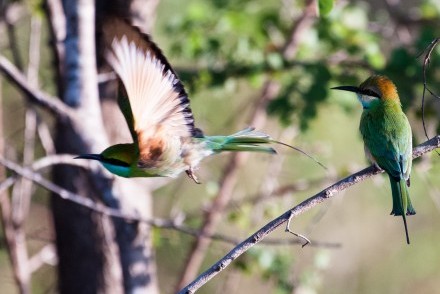
Sri Lanka is an ornithologist's paradise with 426 official
avian species described. There are 233 resident species, of which
26 species are recognised as endemics unique to the island and these
are mostly found in the Wet Zone, including the whistling
thrush, yellow-eared bulbul, red-faced malkoha and brown-capped
babbler. The winter migrants come from distant Siberia
and Western Europe, the reservoirs attracting vast numbers
of water birds including stilts, sandpipers, terns and
plover, as well as herons, egrets and storks. The forests
attract species of warblers, thrushes, cuckoo and many
others. The endemic jungle fowl is Sri Lanka's national
bird, and it is common to see large ornaments topped
by a brass jungle fowl that has an honoured place in
the home on special occasions.
The principal bird sanctuaries, which all have lagoons,
are the Kumana sanctuary in the southeast, Bundala NP
(famed for its flamingos), and the Kalametiya and Wirawila sanctuaries
between Tissamaharama and Hambantota in the south.
Specialist bird-watching tours can be arranged through
Tikalanka Tours, who use expert wildlife guides for the purpose.
Hollywood blockbusters are screened in English in Colombo,
though they are likely to be has-beens by the time they
hit Sri Lanka's shores. Art-house films (in English
and European languages) are shown at cultural centres
such as the British Council and Alliance Française
in Colombo and Kandy. Ubiquitous billboards confront
you with Sri Lankan-made and Indian-made films that
show in cinemas everywhere, including adults-only
flicks such as "Naughty Love"!
Possibly because of the long years of war, late-night
partying and clubbing is rare in Sri Lanka. Outside
Colombo you will find a few clubs in resort areas such
as Negombo, Bentota and Hikkaduwa. Kandy has a couple
of pubs, a nightclub and a casino called the Lake Club.
Most of the action is found at top-end hotels. Colombo's
nightlife is starting to stir, and some interesting
new venues have opened.
In 1998 the 'global bleaching event' - where coral was affected by
higher-than-average ocean temperatures and regional influences - struck
about one-half of the island's coral reefs, but the
affected reefs have started showing signs of recovery.
Coral and interesting shipwrecks can be seen at several
spots along the southwest and south coasts such as
Tangalle. Pigeon Island off Nilaveli
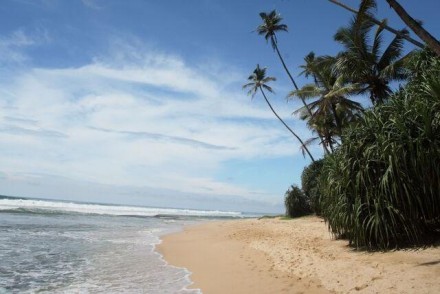
beach is a fine place to go snorkelling, so are
Unawatuna and Mirissa.
Along the southwest coast, the best time to dive and
snorkel is generally from November to April. The seas
are calmest from April to September along the east coast.
There are now four excellent golf courses in Sri Lanka.
Green fees and other expenses including club hire and
caddy (without tip) comes to about LKR4500 a day. The
most scenic course is definitely the Victoria Golf Club
near Kandy, overlooking the Victoria
Reservoir. There is also an excellent historic course
(founded in 1889) at Nuwara Eliya.
In Colombo, the
Royal Colombo Golf Club has a decent course, which is a wonderful, peaceful
haven away from the hussle and bustle of the city. Another, newly-opened course
is now available on the outskirts of the metropolis as well.
Golfing holidays can be tailor-made by Tikalanka Tours to
enable keen golfers to play on Sri Lanka's attractive courses
while also enjoying a tour of the island.
Hiking is gaining popularity in Sri Lanka. There is
not an organised hiking industry as there is in India,
and it is usually a matter of striking out on your own.
However, organised treks can be arranged in a few locations
such as Adam's Peak,
Ella, Horton Plains NP,
Nuwara Eliya,
Sinharaja NP and
Yala West NP by Tikalanka Tours.
Mountain biking is only just catching on in Sri Lanka
so routes and facilities are limited at present.
Sri Lankans who drink alcohol tend to do it at home
or in seedy venues. The few pubs and bars that do exist
tend to be congregated around tourist haunts. Many are
attached to top-end hotels, with top-end prices, and
often have a cheesy 'British' or 'German' theme and
imported beers. In most places outside of the tourist
centres you will find yourself drinking at a restaurant.
Some of the colonial mansions-cum-hotels have lovely
verandas, perfect for a sunset tipple.
What to buy
Handloom cotton and silk, hand-painted batik hangings
and clothing, silverware, wood carvings, coir, and palm
leaf articles, leather goods, jewellery and gem stones
are all good buys in Sri Lanka. Vibrant and colourful
local bazaars are often a great experience but you must
be prepared to bargain. Sri Lankan tea, spices and cashew
nuts are worth taking home and also make ideal gifts.
Some tea and spice gardens welcome visitors and have
retail outlets for their produce.
Bargaining
In some private shops and markets bargaining is normal
and expected but avoid bargaining at government 'fixed
price' shops. It is best to get an idea of the prices
being asked by different stalls for items you are interested
in before taking the plunge. Some shopkeepers will happily
quote twice the actual price to a foreigner showing
interest so you might well start by halving the asking
price. On the other hand it would be inappropriate to
do the same in an established shop with price tags,
though a plea for the "best price" or a "special
discount" might reap results if you are lucky.
Remain good humoured throughout and the bargains may
come your way!
Remember that a fair price is not always the cheapest price
you believe you should pay having done some background research.
Getting a local price for any product or service is incredibly
difficult considering the widely held view that all foreign
visitors are very wealthy and - in comparison to most Sri Lankans
- we are much more affluent. In general, a few rupees here or
there is of little consequence to a foreign visitor but it may
well be of considerable value to a market stallholder or street
vendor and their families. We therefore promote the idea of a
'fair price' for goods and services, although this is a relative
value and must be up to individual choice.
Although Sri Lankans play volleyball, netball, soccer,
tennis and a few other sports, the most popular game
by a long way is cricket. Radio commentaries of big
games are broadcast down streets, boys play the game
at the roadside, in forest clearings or on the beach,
and everything stops when Sri Lanka's national team
plays. Workers take leave from their workplaces for
the day or afternoon, transistor radios reveal the score
in the corner of the office, crowds gather in the street
around television screens, radios blare on buses with
coverage in Sinhala, Tamil and English. Almost everyone
follows the game, men and women, and if Sri Lanka wins,
fire crackers sound around the country. Test Matches
are played at Colombo, Kandy and Galle, and One-Day
Internationals at Dambulla as well.
Theatre,
Classical Music & Galleries
|
|
Theatre of European heritage (e.g. Shakespeare) is performed
at cultural centres such as the British Council and
Alliance Française in Colombo and Kandy, and
at the Goethe Institute in Colombo.
Colombo is where most things happen. Theatre written
and directed by Sri Lankans is often performed at the
Lionel Wendt Gallery & Theatre and the Elphinstone
Theatre. The Lumbini Theatre shows Sinhala theatre.
These theatres and the cultural centres are the main
venues for classical music (Western and Eastern), though
top-end hotels have occasional performances. Art exhibitions
are often held at the Lionel Wendt Gallery and at the
National Art Gallery.
Traditional
Music & Dance
|
|
Traditional music and dance is an important, though
fading, part of Sri Lankan culture. The dances for tourists
are usually sanitised snapshots of various types blended
into one performance, but they are still worth seeing.
Top-end hotels in major resorts are the usual venues.
The School of Dance in Ambalangoda has
irregular performances that are worth catching, and
dancing and drumming shows are performed nightly at
several venues in Kandy.
Top-end hotels in the main west and southwest coast
beach resorts are the only places that rent windsurfers.
Bentota is the best spot for windsurfing,
and several outfits there hire out equipment and provide
lessons.
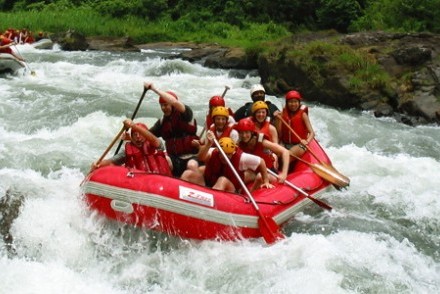
White-water rafting can be done at a few places, notably
on the Kelani River near Kitulgala in the Hill Country
(where Bridge on the River Kwai was filmed).
Boat or catamaran trips for sightseeing, bird-watching
or fishing are becoming very popular. Excursions can
be organised at Bentota and Weligama
through Tikalanka Tours.
|